Sumba is one of those rare places that truly feels like a time capsule. Unlike more heavily touristed islands in Indonesia, Sumba doesn’t lay everything out on a silver platter for you. You have to go looking for its magic, driving down dusty, winding roads and meeting communities that still live exactly as their ancestors did centuries ago.
The heart of Sumba lies in its Marapu culture an ancient animist religion that governs everything from the way houses are built to how the dead are honored. If you are looking to connect with a culture that is deeply spiritual and fiercely preserved, here are seven must-see landmarks that will completely change how you see the world. And honestly, don’t worry too much if you get lost finding them; getting lost is half the fun here.
Top 7 Traditional Villages in Sumba
Exploring Sumba’s cultural landmarks feels less like sightseeing and more like being invited into a living museum. Every village and monument has a distinct purpose, deeply tied to the ancient Marapu religion that still dictates daily life here. From towering traditional homes to massive stone graves that look like they belong in a fantasy novel, these places are full of stories. And, as a local, you cannot find a better guide than me! Let me show you the top landmarks in Sumba!
1. Ratenggaro Village
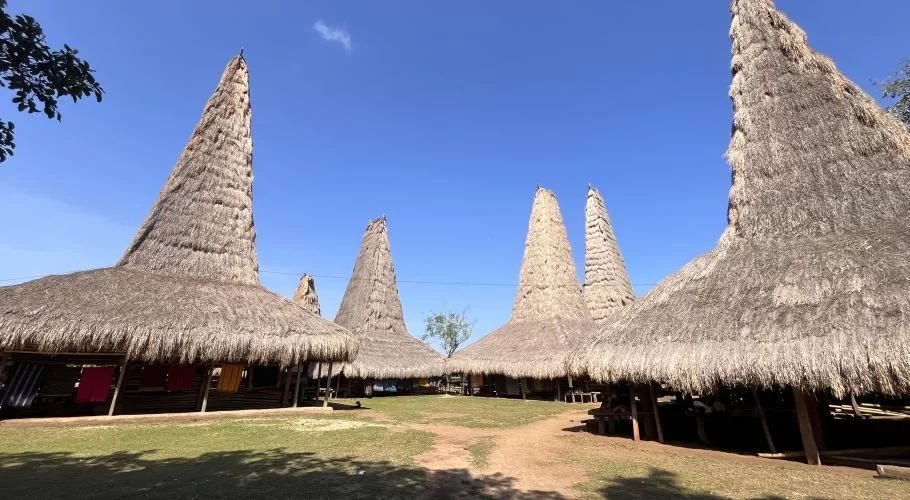
| Location | Umbu Ngedo, Kodi District |
| Regency | Southwest Sumba (Sumba Barat Daya) |
| Landmark Type | Traditional Village (Kampung Adat) |
| Why Visit | To see the tallest traditional Uma Kalada roofs on the entire island, set right against the crashing waves of the Indian Ocean. |
Ratenggaro is easily one of the most breathtaking. The iconic thatched roofs here soar up to 15 meters high-built that way to serve as a pathway for spirits to visit the living. Walking between these towering structures while hearing the ocean roar just meters away feels surreal. There are also ancient megalithic stone tombs scattered right at the edge of the beach, creating a hauntingly beautiful contrast between life, death, and nature.
2. Prai Ijing Village
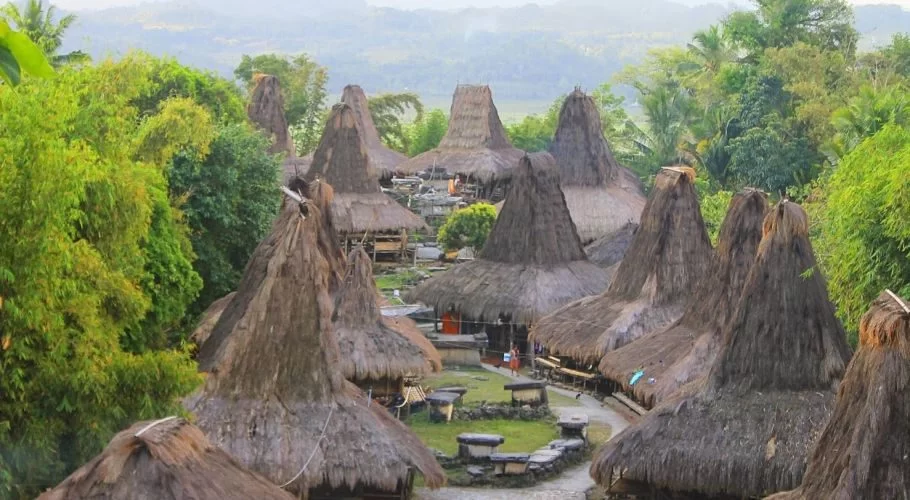
| Location | Tebara, Kota Waikabubak |
| Regency | West Sumba (Sumba Barat) |
| Landmark Type | Traditional Village (Kampung Adat) |
| Why Visit | It offers an incredibly panoramic view of a traditional Sumba village nestled beautifully within lush green hills. |
Prai Ijing is quite accessible compared to some other villages, but it hasn’t lost its soul. The village is built on a slope, and as you walk up the stone pathways, you get this amazing tiered view of the traditional houses. The locals here are incredibly welcoming, and you’ll often see women weaving beautiful Ikat textiles on their porches or elderly men chatting. There is a great viewpoint at the top that lets you look down at the entire layout of the settlement.
3. Tarung Village
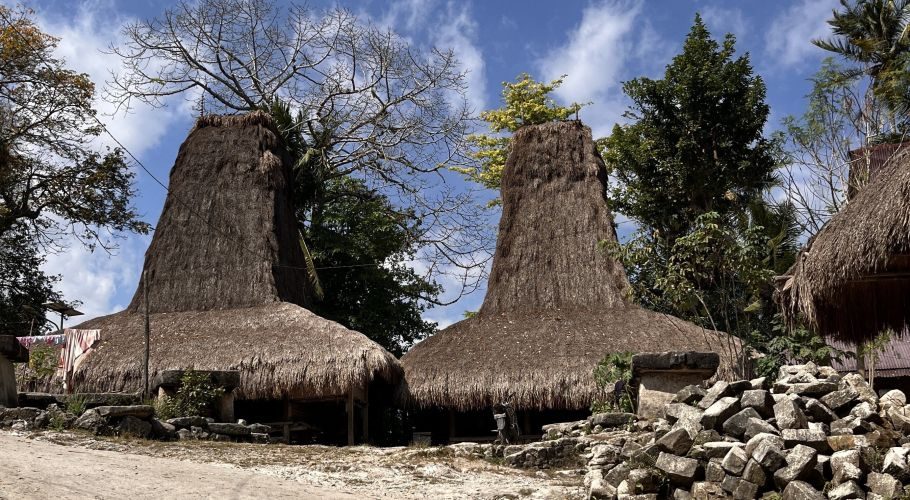
| Location | Center of Waikabubak town |
| Regency | West Sumba (Sumba Barat) |
| Landmark Type | Cultural and Religious Center |
| Why Visit | It is an essential spiritual hub for the Marapu religion, sitting right in the middle of an urban area. |
What makes Tarung fascinating is its location. It sits on a hilltop right in the middle of Waikabubak, the main town in West Sumba. Despite being surrounded by modern life, the moment you walk up the stone steps into Tarung, the modern world completely vanishes. It remains an active center for Marapu rituals and sacrifices. Coming here gives you a deep appreciation for how fiercely Sumbanese people protect their heritage against modernization.
4. Prailiu Village
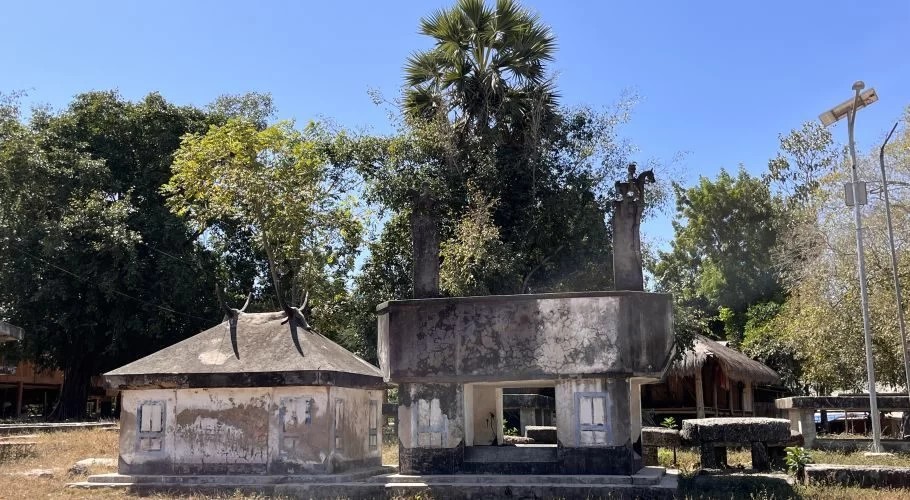
| Location | Waingapu, East Sumba |
| Regency | East Sumba (Sumba Timur) |
| Landmark Type | Megalithic Village |
| Why Visit | To see the ancient tombs with intricate engravings. |
Another absolute gem in East Sumba, King Prailiu Village is home to a staggering piece of history. The ancient tombs with intricate engravings on the site are legendary, because of their sheer number and the dramatic story they recount. The carvings on the tombs here tell elaborate stories from the village and the island’s past, offering a physical library of Sumba’s unwritten history.
5. Praiyawang Village
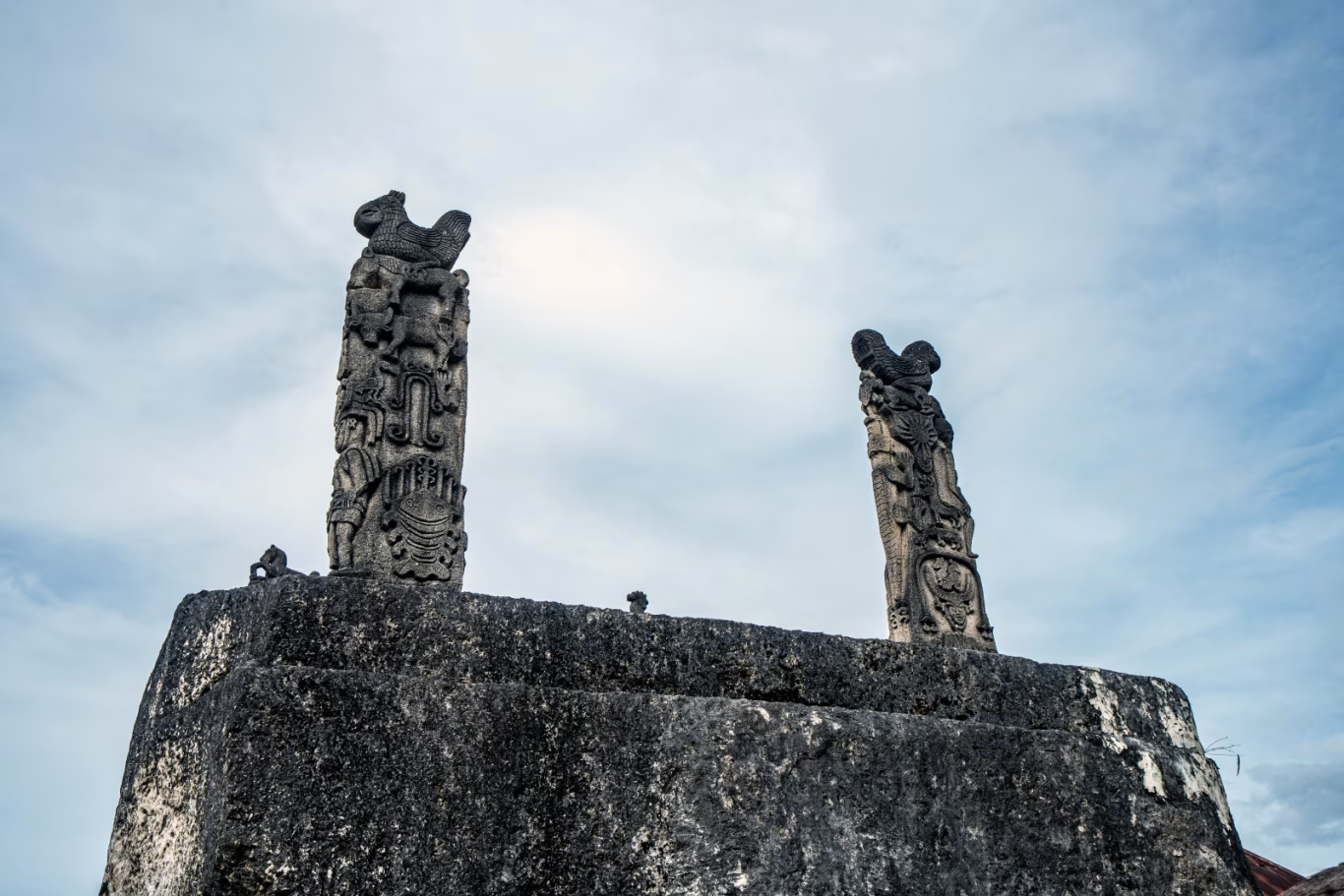
| Location | Rende District |
| Regency | East Sumba (Sumba Timur) |
| Landmark Type | Royal Traditional Village |
| Why Visit | To explore the home of East Sumba’s nobility and see incredibly unique stone tombs with animal carvings. |
Praiyawang is the cultural crown jewel of East Sumba. This village is famous for its distinct social hierarchy and its preservation of royal customs. The megalithic tombs here are quite different from those in the west; they are carved with detailed symbols of animals like horses, buffaloes, and crocodiles, each representing the status and traits of the deceased royals buried inside. It is also an excellent place to observe the creation of East Sumba’s highly sought-after Ikat weaving.
6. Pasunga Village
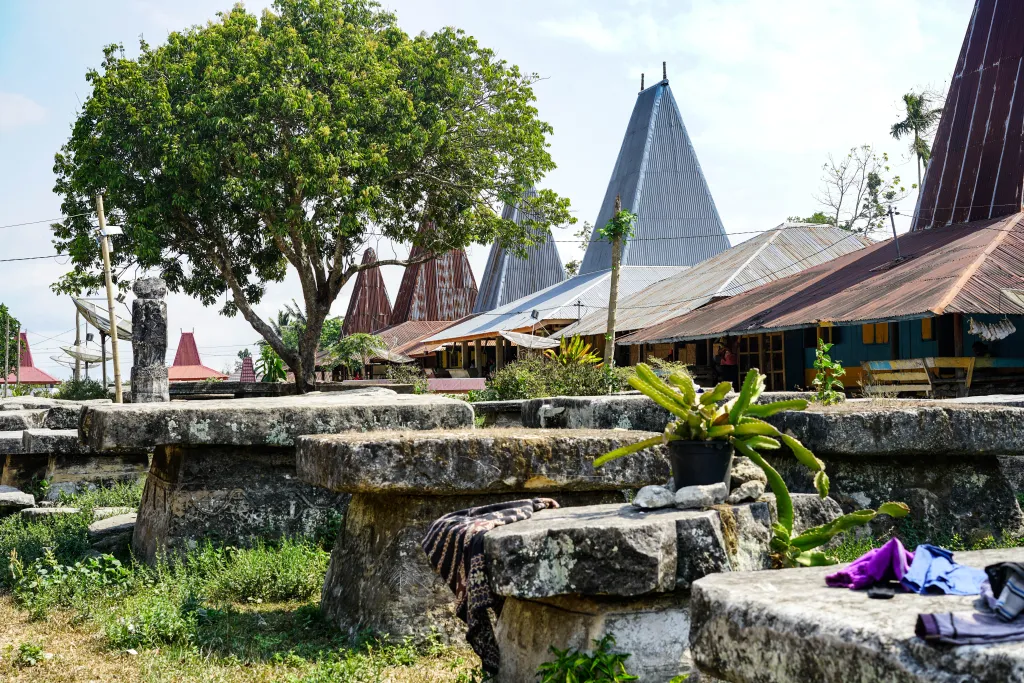
| Location | Anakalang, Central Sumba |
| Regency | Central Sumba (Sumba Tengah) |
| Landmark Type | Megalithic Site and Traditional Village (Kampung Adat) |
| Why Visit | To marvel at some of the largest and most intricately carved stone tombs on the island. |
If you are fascinated by archaeology and ancient history, Pasunga is a mandatory stop. Sumba is famous for its living megalithic culture, and Central Sumba’s Anakalang district has the heaviest concentration of these giant stone structures. In Pasunga, you will find massive, beautifully carved royal tombs right by the roadside. The sheer effort it takes for the community to pull these multi-ton stones from quarries miles away is mind-boggling.
7. Wunga Village
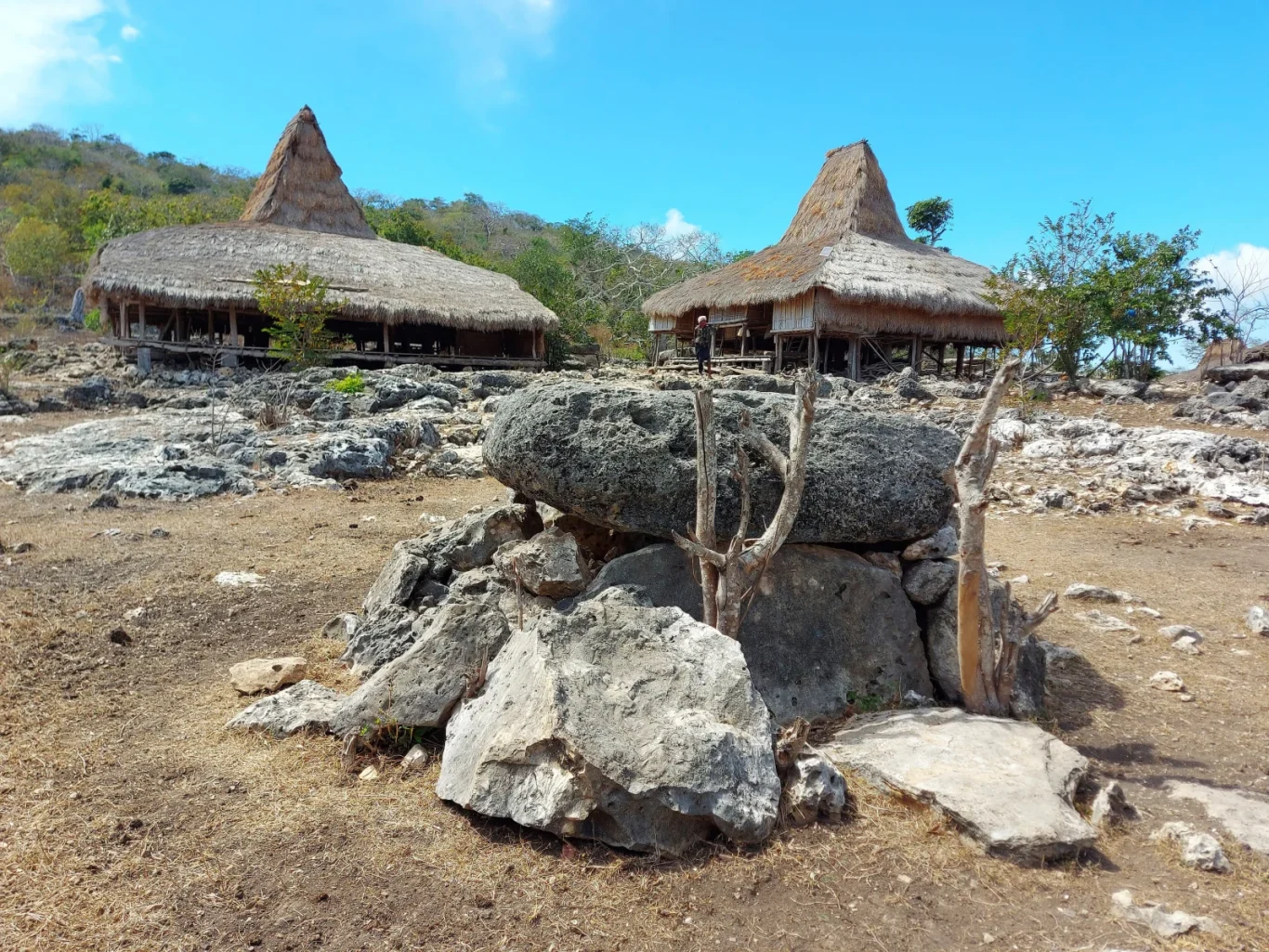
| Location | Haharu District |
| Regency | East Sumba (Sumba Timur) |
| Landmark Type | Traditional Village (Kampung Adat) |
| Why Visit | It is widely considered the very first traditional village built on Sumba island. |
Wunga holds a sacred place in Sumbanese history. According to local lore, this is where the first ancestors of the Sumba people settled after arriving on the island. Located in the dry, savannah-like landscape of East Sumba, Wunga feels incredibly isolated and ancient. The village has a quieter, more solemn energy to it, making it perfect for travelers who want to escape the more popular spots and understand the deep roots of the island’s migration stories.
How to Get to Must-See Places in Sumba
Sumba is divided into two main entry points via air: Tambolaka Airport (TMC) in the west and Waingapu Airport (WGP) in the east. If you want to see all these landmarks, your best bet is to fly into one airport and road-trip your way across the island to fly out of the other
There is no alternative way to get there other than renting a car, motorbike or hiring a driver. Public transportation to these remote cultural villages is practically non-existent. You will need to rent a car with a driver or rent a scooter if you are brave enough to tackle the hilly, winding roads.
I cannot stress this enough: you absolutely need to hire a local guide. These villages are not museums; they are active, deeply spiritual communities. A local guide who speaks the specific regional dialect is essential. They will teach you the proper etiquette, introduce you to the village elders, explain the complex Marapu symbols, and handle the formal entry permissions so you don’t accidentally disrespect sacred spaces.
Insider Tips and Facts
While these bits of information are constantly repeated all across the internet and our travel guide, there are a few key tips you must always remind yourself.
The Betel Nut Custom: When entering a traditional village, it is customary to offer sirih pinang (betel nut) to the village elders as a sign of respect and peace. If you don’t have betel nuts, your guide will usually help you buy some beforehand, or you can offer a small cash donation instead.
Dress Modestly: Sumba is culturally conservative. When visiting these sacred sites and villages, make sure your shoulders and knees are covered. It’s a great excuse to buy a local Ikat cloth and wrap it around your waist
Pasola Festival: If you plan your trip around February or March, you might catch the Pasola festival in West or Southwest Sumba. It’s a wild, ritualistic horseback spear-fighting tournament held to appease the Marapu gods for a good harvest
Always Ask Before Snapping a Photo: While the locals are incredibly photogenic and photoraphy is usually welcome, always point to your camera and ask for permission first out of basic respect
| Place | Subcategory | Address |
|---|---|---|
| Ratenggaro Village | Traditional Village | Umbu Ngedo, Kodi Bangedo district, Southwest Sumba regency |
| Prai Ijing Village | Traditional Village | — |
| Tarung Village | Traditional Village | Wailiang, Waikabubak, West Sumba regency |
| King Prailiu Village | Traditional Village | Umbu Rara Meha street, Prailiu, Kambera district, East Sumba regency |
| Praiyawang Village | Traditional Village | 3M7C+P25, Rindi, Sumba Timur, East Sumba Regency, East Nusa Tenggara, Indonesia |