Sumba Public Transport Guide (2026): Traveling Around Sumba the Local Way
Learn all about how to navigate Sumba's public transport.
What to Expect from Sumba’s Public Transport
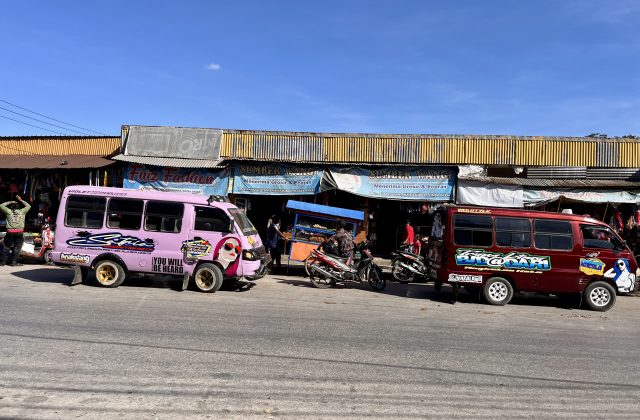
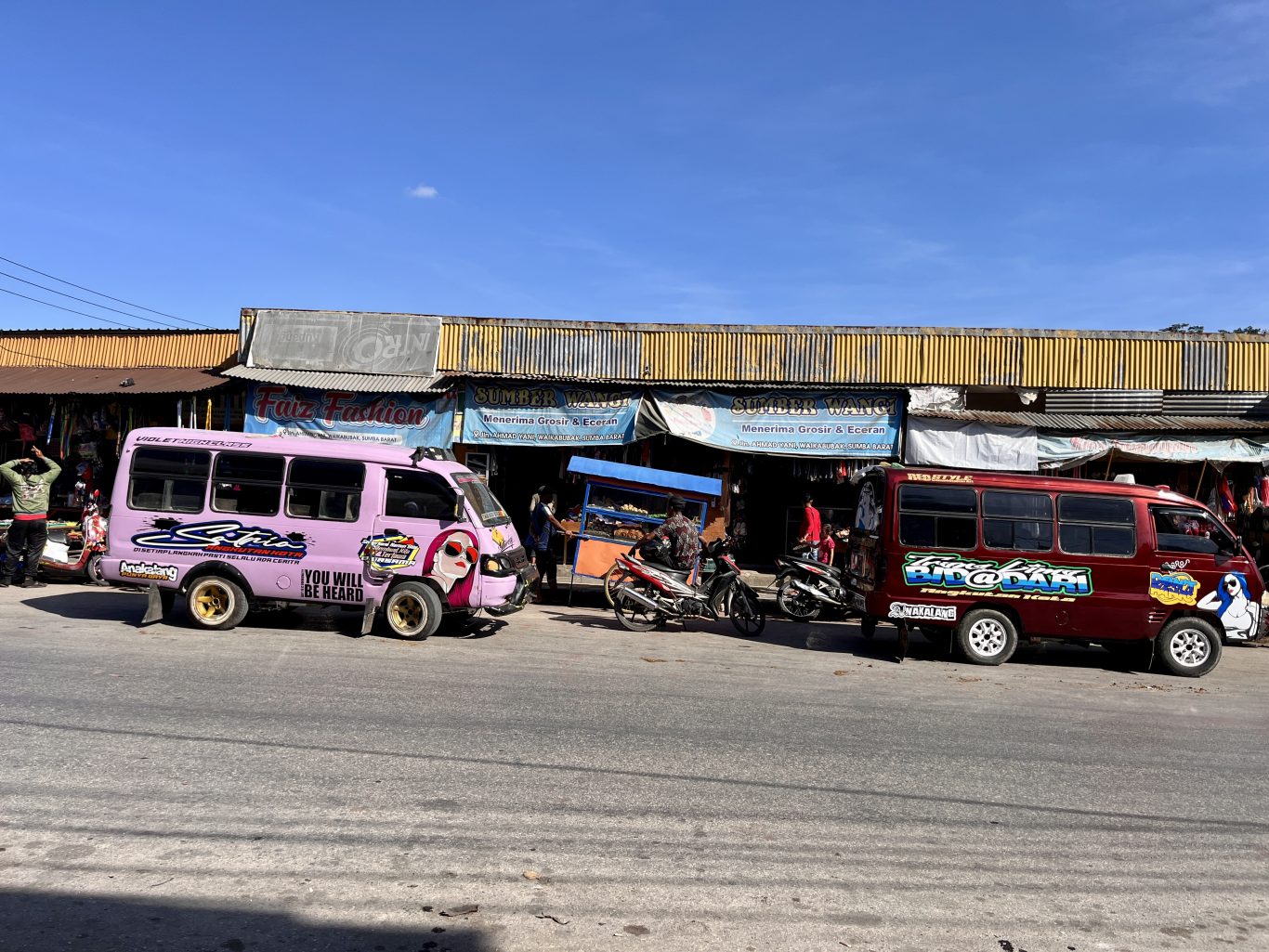
Sumba’s public transport is an undeniably authentic experience. While there are buses, the infrastructure can be challenging, and you’ll need patience and flexibility. In Sumba, public transport is truly local, unlike the tourist-friendly transport networks of better-known Indonesian islands.
Traveling by public transport in Sumba is an adventure that comes with its own set of rules and difficulties. Three-hour bus journeys can easily stretch to an entire day. Don’t expect fixed timetables or formal bus stops; you’ll often flag down vehicles from the side of the road, and they depart only when full. Vehicles can be very crowded, with over 15 people packed in, especially during school hours.
Always Carry Cash
Be aware that ATMs are scarce outside the main towns, so ensure you have enough cash before you travel.
Sumba Public Transport Costs
Here are some estimated costs for popular routes in Sumba.
| Route | Rate (Per Passenger) |
|---|---|
| Waingapu to Melolo | IDR 20,000 |
| Melolo to Biang | IDR 40,000 |
| Waingapu to Mangili | IDR 30,000 |
| Waingapu to Waikabubak | IDR 50,000 |
| Waingapu to Waitabula | IDR 75,000 |
| Waingapu to Tarimbang (Truck) | IDR 50,000 |
| Waingapu to Lewa | IDR 15,000 |
| Tambolaka to Waikabubak | IDR 15,000 |
| Tambolaka to Waikabubak (Shared Car Travel) | IDR 50,000 |
Know Before You Go
As a foreigner, you may be quoted a higher price initially.
Getting around East Sumba
The main hub for transport in East Sumba is Waingapu, the island’s capital. Most long-distance buses depart from one of the main terminals outside the city center. A bemo from the central terminal to these main terminals costs around IDR 5,000.
Waingapu to Waikabubak & Tambolaka
This is one of the main routes in Sumba. Buses depart from Terminal Kampung Baru, located about four kilometers east of the Waingapu center. The journey to Waikabubak takes about 4.5 hours and costs approximately IDR 50,000. For Tambolaka, the journey extends to about 6 hours and costs around IDR 75,000. Buses run almost every hour during daylight hours.
Waingapu to Tarimbang
A truck (known locally as a bis kayu) leaves daily for Tarimbang at 05:00 from Terminal Kampung Baru. It’s a slow, rough ride on wooden benches in the back of an open truck, taking about 5 hours and costing IDR 50,000.
Waingapu to Melolo, Rende, and Waimarang
Buses to Melolo, Rende, and Waimarang depart from Terminal Kawangu, the southern terminal about 10 kilometers from the center of Waingapu. The journey to Melolo takes about 2 hours and costs IDR 20,000. From Melolo, you can continue to Mangili (3 hours and IDR 30,000) or Biang (4 hours and IDR 40,000).
Getting around West Sumba
In West Sumba, the main transport hubs are Tambolaka and Waikabubak. Public transport here follows the same rules: vehicles leave from the market area when full.
Waikabubak to Tambolaka
This is a well-served route. You have 2 options:
- Public Bus: These can be flagged down from the roadside, and the journey costs roughly 15,000 IDR. They will drop you off at a stop outside of Waikabubak, from where you need to take a bemo (5,000 IDR) to the town center.
- Shared Car (Travel): This is a more comfortable option costing about 50,000 IDR per passenger. Buses and travel cars run frequently from early morning until late afternoon.
Other Routes Across Sumba
Besides major routes, there are also alternative routes running between main towns and various points of interests.
Waingapu to Lewa
Buses to Lewa depart from Terminal Kampung Baru in Waingapu. The journey takes about 1.5 hours and costs approximately 15,000 IDR
Tambolaka to Waikelo (Port)
Regular buses and bemos connect Tambolaka with the port of Waikelo. The journey takes a little over an hour. This is the primary route for those taking the ferry to and from Sumbawa
Waingapu to Bendungan Kambaniru (Kambaniru Dam)
A bemo from Terminal Kota in Waingapu takes about 20 minutes to reach the dam and will cost roughly 5,000 IDR. To return, you will need to flag down a passing bemo from the roadside
Sumba Public Transport Tips
- ATMs are rare outside of Waingapu and Waikabubak. Always carry enough small-denomination cash for your journey.
- A 3-hour journey can take all day. Don’t pack your itinerary too tightly and always have snacks and water with you.
- Knowing a few phrases like “Ke (destination) berapa?” (How much to (destination)?) will be incredibly helpful, as English is rarely spoken.
- Buses often leave from designated terminals (like Terminal Kampung Baru or Terminal Kawangu in Waingapu). While you can sometimes flag them down, going to the terminal gives you the best chance of getting a seat.
- Always carry small bills, since drivers will not always have change for large banknotes.
- For maximum freedom, renting a scooter (around IDR 100,000-200,000 per day) is a fantastic alternative, giving you access to remote spots and villages that buses don’t serve.
Frequently Asked Questions
Is public transport good in Sumba?
Good is subjective. It is not reliable or fast, but it is an authentic and very cheap way to travel like a local. However, be prepared for delays and crowds.
Between which hours do buses run in Sumba?
Most buses and bemos run during daylight hours, typically from early morning until late afternoon or early evening. For example, the truck to Tarimbang leaves at 05:00, and buses on major routes run almost hourly during the day.
Are there buses after midnight in Sumba?
No. It is not recommended to travel at night, and public transport services largely cease after dark.
Can I rely on public transport in Sumba?
For practical purposes, no. You cannot rely on fixed timetables. Buses leave only when they are full, and journeys can take much longer than expected. If you have a tight schedule, hiring a private driver or renting a motorbike is a much more reliable option.
Is public transport cheap in Sumba?
Yes. It is exceptionally affordable. For instance, a 4.5-hour bus journey from Waingapu to Waikabubak costs only about IDR 50,000 (around USD 3.50).
Which bus routes are there in Sumba?
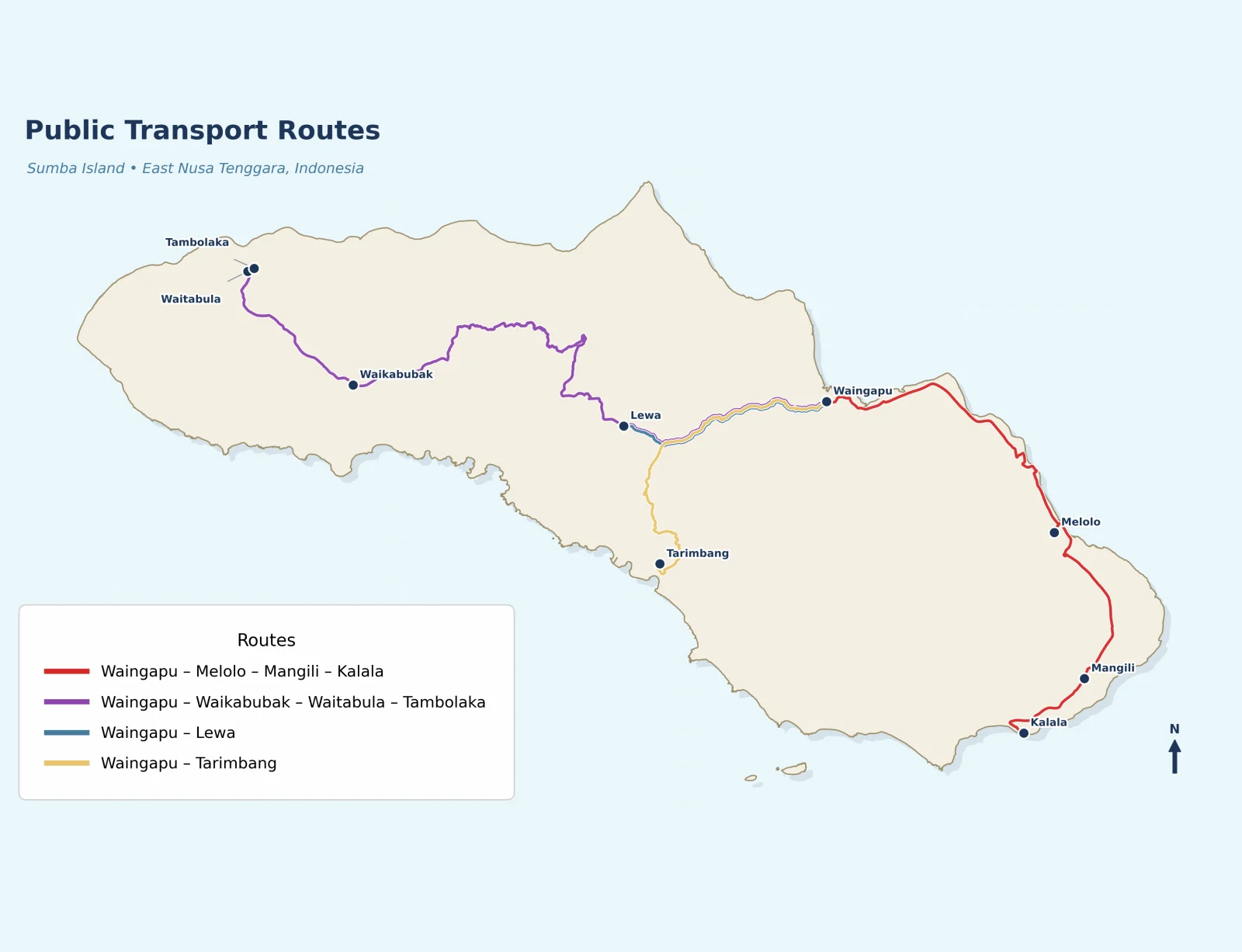
- Waingapu – Waikabubak – Tambolaka (the main east-west route)
- Waingapu – Melolo – Mangili – Biang
- Waingapu – Lewa
- Waingapu – Tarimbang (via a truck)
- Tambolaka – Waikabubak
Do drivers speak English? Do I have to know some Indonesian?
Most drivers and conductors speak little to no English. Learning some basic Indonesian phrases is highly recommended for navigating, bargaining, and asking for directions.
Are Sumba buses usually crowded
Yes, they can be very crowded, sometimes with over 15 people crammed into a small vehicle, especially during school hours. Travelers with large backpacks may find public buses difficult.
Can I take the bus from anywhere, or are there bus stops?
While you can often flag down a bemo or bus from the roadside on its route, the main departure points are the city/regional terminals, such as Terminal Kampung Baru and Terminal Kawangu in Waingapu. Going directly to the terminal is the best way to secure a seat.
How do I pay the driver? Do I have to buy a ticket beforehand or do I pay on the bus?
You pay the driver or the bus assistant directly on the bus. There is no ticket booth. It is common practice to pay in cash when you reach your destination or when the assistant comes around to collect fares. Always try to have small bills ready.