01 / STAY
5–10 Days
Recommended Stay
Minimum 5 days for highlights, 7–10 for deeper exploration
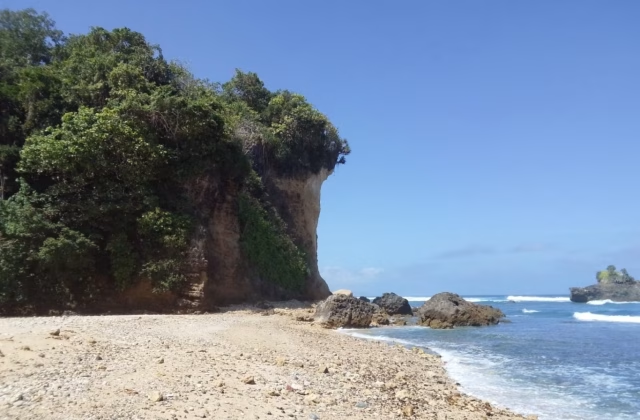
Unlike the developed tourist hubs of Indonesia, Sumba remains wild and unspoiled. From swimming in the clear waters of Weekuri Lagoon to chasing waterfalls and surfing world-class waves, Sumba promises an adventure for those willing to venture off the beaten path and immerse themselves in authentic, raw beauty. Of course, you must plan your trip in advance to truly enjoy this island paradise. This page will tell you all you need to know about planning a Sumba trip!
Sumba’s charm lies in its remoteness, which comes with specific logistical challenges. Roads can be rough, and infrastructure is limited compared to more touristy destinations. That’s why planning allows you to navigate the island’s raw landscape with confidence, maximizing your time to focus on its incredible culture and nature.
The first step of your trip should be deciding when you want to visit the island. Sumba’s climate is similar to the rest of Indonesia, with two distinct seasons:
The best time to visit Sumba is from June to August. In this three-month period, the island is warm and resorts offer various activities. If you want to skip the hot season, you can pick the shoulder periods between February and March or October and November.
Planning your budget is the second step for a smooth journey to Sumba. Below, you can find different budget types and what they typically cover in Sumba:
| Category | Budget ($35–65/day)* | Mid-Range ($65–125/day)* | Premium ($125–250/day)* | Luxury ($250–600+/day)* |
|---|---|---|---|---|
| Accommodation | Guesthouses, homestays, hotels | Mid-range hotels, AirBnbs, boutique hotels | Luxury accommodation, villas, resorts | World-class resorts (NIHI, Haweri, Cap Karoso) |
| Meals | Local eateries, fast food, warungs | A mix of tourist restaurants and local eateries | Resort restaurants, high-end venues | Gourmet dining at resorts, private chefs at villas |
| Transport** | Public transport, bemos, ojeks | Private driver with a car | Private driver with a car | Private charters, helicopter tours, private driver with a car |
| Activities | Free beaches, budget tours | Guided tours, places with entry fees | Premium tours, special cultural experiences | Premium tours, special cultural experiences |
* These are daily estimates; prices vary by season. Please refer to our Budget and Costs guide for a comprehensive overview of potential expenses in Sumba.
** The transport category covers transportation around the island. Traveling to the island usually costs around USD 120 to 400.
Whether you need a visa to travel to Indonesia depends on your nationality. Citizens of almost all countries, including those from the EU/EEA, the USA, the UK, Canada, Australia and New Zealand, need to apply for an e-Visa on Arrival (e-VOA).
Citizens of ASEAN countries and several other nations that have mutual agreements with Indonesia (such as Turkey) can travel to Sumba without a visa.
You can check our Visa & Entry guide to learn more about visa policies concerning your nationality.
Sumba lacks an international airport. Therefore, first you need to fly to another island in Indonesia with an international airport, most typically Bali or Lombok. From there, you have two options:
Taking a plane is the best option for a fast and convenient trip. Nevertheless, ferries are unmatched for the scenery and atmosphere. View our guide on how to get to Sumba for more information.
Picking the airport of arrival is the first major decision in planning your Sumba itinerary, as both are located quite far from each other, in distinct parts of the island. So, your choice should align with your planned route across the island to minimize long transfers.
| Airport | Region | About |
|---|---|---|
| Tambolaka Airport (TMC) | West Sumba | Tambolaka Airport (TMC) is the most popular entry point and the larger of the two, serving as the gateway to West Sumba’s famous resorts like Nihi and Cap Karoso, as well as attractions like Lapopu Waterfall and Ratenggaro Village. |
| Waingapu Airport (WGP) | East Sumba | Waingapu’s Umbu Mehang Kunda Airport (WGP) is the main entry to East Sumba, placing you close to the city center and iconic spots like the rolling hills of Wairinding and Walakiri Beach. |
Traveling around Sumba has its own challenges. As the island has a developing infrastructure, public transport is still quite limited. Therefore, you should carefully pick the right mode of transportation for your trip before arriving on the island:
| Means of Transportation | About |
|---|---|
| Hiring a driver with a car | Hiring a driver is the most common way to get around Sumba. Since drivers know all about the island, you can be sure that your journey will go smoothly. |
| Self-driving a car or motorbike | Self-driving a car or motorbike is a convenient way to travel across Sumba. However, if it’s your first time in Sumba, the challenging nature of the island might make it difficult. |
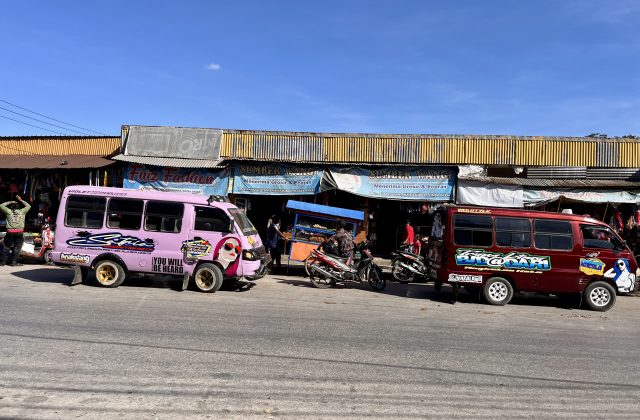
| Public transport and ojeks | Public transport in Sumba is quite unreliable and you usually need a good grasp of the local language to engage with the drivers. Ojeks, motorbike taxis, are a popular means of transportation, but it will be impractical for long journeys. |
Traveling from point A to point B in Sumba might be complicated for a first timer. Thankfully, we have put up all the key information you need in our Getting Around Sumba guide; view it for all about traveling on the island.
Connectivity is very important when traveling to Sumba. You can purchase an eSIM before your flight and have a functioning eSIM when you land. Airalo and Truely are the most reliable eSIM operators for Sumba travelers.
You can alternatively get a physical SIM upon your arrival. Telkomsel is the operator with the best coverage on Sumba. Their SIMs are sold at the airport and shops in major towns.
Tours and tailored itineraries are what make Sumba a great destination for thrill-seekers. You can join horseback riding tours, surf trips or diving expeditions. Your choice between a private and group tour on Sumba will significantly shape your experience and required budget.
Finding group tours might become difficult as the peak season (July–August) or the Pasola festival (February–March) approach, due to high demand and few organizations. So, book your tours weeks in advance to secure a spot.
Local guides know which warung serves the most delicious dish or where to find the most authentic ikat. Since they speak the local language, they can help you communicate with vendors and get better deals when purchasing items. If you have villages on your itinerary, local guides can also provide you with essential cultural context.
Here is a step by step guide to acquire local expertise!
In Sumba, the most typical way to get a guide is to contact your resort. Almost all resorts, guesthouses, and homestays have trusted guides or drivers on call. Contact your accommodation to arrange a suitable guide for your itinerary.
Not all guides speak fluent English. Check their language level and whether they can adapt the route to your interests before confirming and paying any deposit.
Clarify whether the rate covers fuel, entrance fees, and meals. A day rate of IDR 500,000 to 800,000 is typical for a private driver-guide.
Traveling to Sumba doesn’t have to break the bank. Here are several ways to save money while still enjoying an incredible experience.
FAQ
It depends on your itinerary. Tambolaka (TMC) in West Sumba is closer to luxury resorts like NIHI, Weekuri Lagoon, and the dramatic Kodi villages. Waingapu (WGP) in East Sumba is better for nature, savannas, and traditional ikat weaving communities.
The most frequent carriers are Wings Air (Lion Air Group), Nam Air, and Citilink. Batik Air also operates larger aircraft on some routes, including a daily Bali–Tambolaka service with business class.
Small regional planes often have strict limits — typically 10 kg or 15 kg for cabin and checked combined. Larger aircraft (Batik Air) offer standard 20 kg checked allowance. Always verify with your airline, and pack light if possible.
Yes. PELNI and ASDP operate ferries from Ende (Flores), Kupang (Timor), and Sabu Island to Waingapu. Crossings take 8–15 hours depending on the route. Schedules change frequently — always confirm at the port or with a local agent.
Weekuri Lagoon is Sumba’s most iconic natural attraction — a breathtaking saltwater lake separated from the Indian Ocean by a rugged cliff. For cultural sites, the traditional village of Ratenggaro on the southwest coast is the most photographed, perched dramatically above the sea.
Your Sumba adventure begins with a single step — and we're here to help you take it