Navigating Sumba by Road: A 2026 Traveler’s Companion
Trying to figure out how to get around Sumba? Let's explore how to navigate the island by car and motorbike.
Why Renting a Car is Essential in Sumba
To truly feel Sumba’s raw beauty, you quickly realize that a rental car is not a luxury—it is the key to the whole experience. Public transport barely scratches the surface, and the island’s soul hides far from the main roads, down tracks that lead to hidden waterfalls and clifftop villages. Without your own wheels, you are tied to someone else’s schedule. With them, you gain the freedom to stop for a spontaneous swim at Weekuri Lagoon or chase a sunset over the savannah without a care. That independence transforms a trip into a personal adventure. Many travelers say the moment they pick up the keys is when the real journey begins.
Public Transport vs. Private Rentals
| Public Transport | Private Rentals |
|---|---|
| Cheapest option (usually USD 1-2 per day) | More expensive (motorbikes from USD 8-9/day and cars from USD 40/day) |
| Very unreliable; no set schedules. | You can ride whenever you want. |
| Limited coverage; only between different towns. | You can ride wherever you want. |
| Buses usually use the newest roads and are operated by professional drivers. | You must be careful when driving; Sumba’s roads are quite challenging for anyone not used to them. |
| You need to learn some basic phrases or use a translator app to communicate with drivers. | You can enjoy complete privacy and freedom; you don’t have to rely on anyone to drive you around. |
Cars vs. Motorbikes: Which One to Choose?
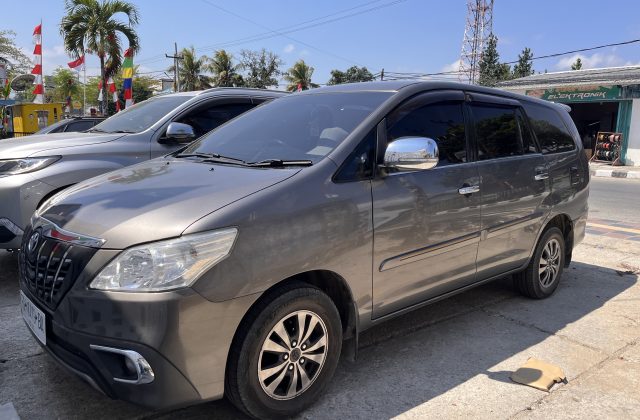
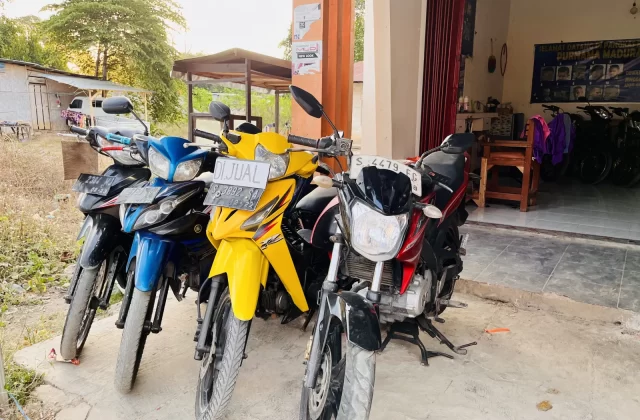
This decision often becomes the first real test of your travel style. Motorbikes are the go-to means of transportation for visitors in Sumba, since the island’s cities and roads are more suitable to them. Cars, on the other hand, are better for large groups and families, or those not feeling comfortable riding a bike.
Below, you can see the key advantages of both types of vehicles:
| Motorbikes | Cars |
|---|---|
| Easy access to remote areas and secluded attractions. | Ideal for surfers, divers and campers who might need to carry heavy gear around. |
| More suitable for solo travelers or couples. | More suitable for large groups and families. |
| Well-suited for Sumba’s narrow streets. | Optimal for long-drives across the savanna. |
| Efficient fuel consumption (38-45 km/L) | Higher fuel consumption (8-11 km/L) |
| Starting from USD 8-9/day. | Starting from USD 40/day. |
Hiring a Driver Is the Way
In Sumba, hiring a driver is the norm among visitors. Professional drivers are used to the unpredictable terrain and they often serve as guides. Additionally, their connections to local communities can open doors to villages where tourists are otherwise just observers.
Renting a Vehicle in Sumba
If you are staying at a resort, you don’t even have to worry about navigating rentals yourself. Most of the time, your accommodation can arrange it on your behalf. Otherwise, you might need to find a rental provider yourself.
Thankfully, finding a rental is simpler than you might expect, though options are nothing like Bali’s crowded market. Most agencies are small, family‑run operations, often based near the airports in Tambolaka or Waingapu.
Booking and Picking Up
Booking ahead is the norm in Sumba and usually done via WhatsApp. Most agencies offer free airport pickup.
Do not forget to inspect the vehicle before agreeing on anything. Walk around the vehicle with your phone, photograph every existing scratch and dent, and make sure the agent notes them on the rental agreement. Check the spare tire, the jack, and that the air conditioning blows cold.
Requirements for Self‑Driving
The paperwork is straightforward but non‑negotiable:
- Passport: Valid travel document with your information clearly stated.
- Driver’s License: Issued by your country and permitting you to drive the vehicle type.
- International Driving Permit (IDP): Required alongside your home license. Some rental providers might not ask for it but you need an IDP to drive legally in Sumba.
- Credit Card: Everything is cash in Sumba but some providers might still ask for a credit card for dedposits.
Prepare everything before you arrive, and the pickup process becomes a smooth, almost anticlimactic moment.
IDP Is a Must-Have
Since it is loosely enforced, some travelers skip getting an IDP completely. However, in case of an accident or a police stop, lacking this document might get you serious fines.
Distances between East and West Sumba
In Sumba, you must treat any estimated driving time as a starting point, then add a generous buffer. The drive from Waingapu in the east to Waikabubak in the west covers roughly 137 kilometers, but it is rarely covered in under three hours, often closer to four.
You can find the typical routes and estimated drive times on the table below:
| Route | Est. Distance | Drive Time by Car | Drive Time by Motorbike |
| Tambolaka Airport → Waikabubak | 42 km | 1 hr | 50 mins |
| Tambolaka Airport → Weekuri Lagoon | 50 km | 1 hr 20 mins | 1 hr 10 mins |
| Tambolaka Airport → Waingapu | 170 km | 4 hrs | 3.5 hrs |
| Waikabubak → Waingapu | 135 km | 3 hrs | 2.5 hrs |
| Waikabubak → Nihiwatu / Rua | 25 km | 45 mins | 35 mins |
| Waingapu → Wairinding Hills | 25 km | 40 mins | 30 mins |
| Waingapu → Walakiri Beach | 20 km | 30 mins | 25 mins |
| Waingapu → Tanggedu Waterfall | 45 km | 2 hrs | 1.5 hrs |
| Waingapu → Puru Kambera | 28 km | 45 mins | 35 mins |
| Waingapu → Waimarang Waterfall | 80 km | 2 hrs | 1 hr 45 mins |
Fuel Management & Gas Stations
Finding a gas station is a common worry among travelers. Petrol stations are plentiful only along the main western corridor; once you head east toward Melolo or south toward the coast, they become rare. Roadside stalls sometimes sell fuel in bottles, but it’s an expensive solution you’d rather avoid. So, fuel up whenever you are near a gas station.
Gas Stations in Sumba
| Place | Address |
|---|---|
| Pertamina Anakalang | Anakalang, Katikutana district, Central Sumba regency |
| Pertamina Bondo Kodi | — |
| Pertamina Bumi Indah | — |
| Pertamina Kambaniru | — |
| Pertamina Kanatang | — |
| Pertamina Lewa | — |
| Pertamina Mamboro | — |
| Pertamina Matawai | — |
| Pertamina Prai Bakul | — |
| Pertamina Rambangaru | — |
| Pertamina Tema Tana | — |
| Pertamina Umalulu | — |
| Pertamina Waikabubak | Bhayangkara street, Waikabubak district, West Sumba regency |
| Pertamina Waingapu Center | Adam Malik street, Hambala, Waingapu district, East Sumba regency |
| Pertamina Watu Kawula | — |
| Tambolaka Pertamina | Radamata, Tambolaka district, Southwest Sumba regency |
Gas Prices in Sumba
There are only public gas stations in Sumba, operated by Pertamina. Their rates are more affordable than private companies that operate on the mainland.
| Fuel | IDR/Liter | USD/Liter |
|---|---|---|
| Pertamax Turbo RON 98 | IDR 19,600 | ~USD 1.11 |
| Pertamina Dex CN 53 | IDR 25,200 | ~USD 1.52 |
| Dexlite CN 51 | IDR 23,700 | ~USD 1.34 |
| Pertalite RON 90 | IDR 10,000 | ~USD 0.55 |
Mechanics & Maintenance Spots in Sumba
The rental provider will usually take care of any problems with your vehicle. However, when you have a flat tire in a rural area, the easiest solution is usually heading to the nearest mechanic. There are plenty of repair shops in towns, especially for motorbikes.
Below is a map of some of the most well-known local car and motorbike mechanics in Sumba:
| Place | Subcategory | Address |
|---|---|---|
| Delta Motor | Car Mechanic | Bhayangkara street, Waikabubak district, West Sumba regency |
| Imanuel Motor | Motorcycle Mechanic | Bhayangkara street, Waikabubak district, West Sumba regency |
| Bangun Jaya Mechanic | Motorcycle Mechanic | Sapurata street, Kalena Wano, Tambolaka district, Southwest Sumba regency |
| Orens Motor | Motorcycle Mechanic | Matawai Amahu street, Kambajawa, Waingapu district, East Sumba regency |
| Asmi Motor | Motorcycle Mechanic | KM 04, Kambajawa, Waingapu district, East Sumba regency |
Essential Tips for a Comfortable Journey
Understanding cultural etiquette and smart practices are the ways to a truly comfortable journey in Sumba. Here are some essential tips to make the best of your trip across this paradise island:
- Never pass a Pertamina station without filling-up: There are only a handful of fuel stations in Sumba, mostly clustered in the island’s western half. These stations sell gas at much more affordable rates than roadside vendors; so, consider yourself lucky if you encounter a Pertamina station and fuel up.
- Download offline maps: Navigating unmarked roads with limited signal is a hassle. Data can be sluggish in rural areas and signal drops out unpredictably. Offline maps can help you greatly when navigating remote regions.
- Carry betel nuts and small gifts: When you drive yourself, without a guide along, you arrive at villages not as part of an organized tour but as an individual guest. Remember that you are expected to give the village elder betel nuts (sirih pinang) and small offerings (like coffee).
- Slow down: Unpaved roads of Sumba aren’t suitable for speeding and aggressive driving is the fastest route to a flat tire or a damaged undercarriage.
Frequently Asked Questions
Should I rent a scooter, a regular car, or a 4x4 on Sumba?
Most rental cars in Sumba are 4x4 vehicles. It is particularly challenging to get to remote beaches like Weekuri or Bannna without a 4x4.
Can I rent a car without a driver in Sumba?
Yes, though, it is harder to find a car-only rental provider, since it is norm in Sumba to hire a driver with the car.
What documentation or license do I need to rent and drive a vehicle in Sumba?
You need a passport, a home-issued driver's license and an international driving permit (IDP).
How much does vehicle rental typically cost per day in West vs. East Sumba?
Rental motorbikes usually start from USD 8-9/day, while cars are from USD 40/day, regardless of the location.
Are scooters safe for long-distance driving across the island?
Yes, riding a scooter across Sumba is safe. However, it is essential to follow traffic rules, common sense and check the weather forecast.
Is Google Maps reliable for driving routes across Sumba?
It is generally reliable enough to get you from point A to point B. Don't forget to download offline maps.
Is Sumba.travel's Interactive Map reliable?
Our map is constantly updated through our agents on field, traveling across Sumba to verify establishments. Therefore, we can confidently say that our map is largely reliable for travelers looking for the next spot to visit.
How long does it actually take to drive from Tambolaka (West) to Waingapu (East)?
The acual drive time can be anything between 4 and 5 hours, due to changing road conditions.
How do I deal with livestock (water buffalo, horses, goats) on the road?
Slow down and stay inside your vehicle. You can move very slowly forward. Most of the time, the animals will move off the path on their own.
Where do I refuel, and how far apart are gas stations?
There are ony a handful of fuel stations on Sumba, mostly around major towns and roads in the western part of the island.