For the Sumbanese, ikat textiles are not decorative commodities but a spiritual thread binding the living to the Marapu, the ancestors and the supreme creator. The ability to process cotton and weave is believed to be a divine gift from Marapu, and the creation process is always preceded by prayers and offerings, such as the ritual sacrifice of a chicken before dyeing sacred blue fabrics.
The Marapu belief system orders the cosmos into complementary dualisms, where textiles are feminine items associated with the fertile, watery underworld, directly opposing masculine items like gold and livestock. In practice, ikat is the currency of the soul. Woven cloths (hinggi for men, lau for women) are essential in bride-wealth exchanges, given as offerings to appease spirits, and wrapped around the deceased to ensure safe passage to the afterlife, effectively acting as a bridge that carries the soul into the spirit realm.
Natural Dyes and Creation of Ikat Textiles
The breathtaking palette of Sumba ikat is a testament to a profound knowledge of ethnobotany, as every color is derived from the island’s flora. Unlike industrially produced cloth, Sumbanese weavers reject synthetic chemicals entirely, utilizing a complex 42-stage manual process from cotton seed to finished textile. This ancient alchemy requires not only skill but immense patience, as the process of foraging for raw materials, preparing the dyes, and repeatedly dipping and drying the yarns can stretch across months and even years. The value of the textile lies as much in the time absorbed by the fibers as in the final visual beauty, representing a slow, meditative art form that is resisting the speed of modern industrialization.
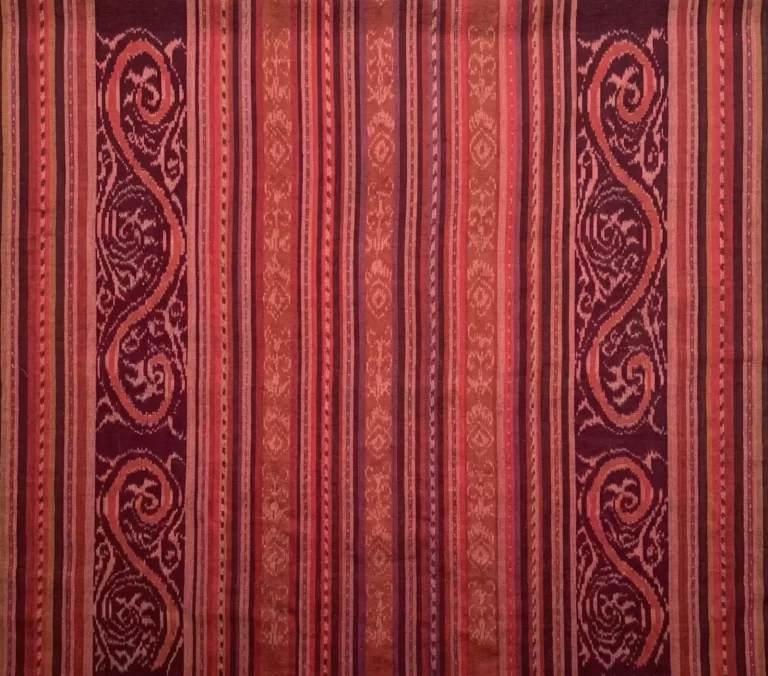
Kombu (Red)
The iconic rusty reds and burnt oranges characteristic of East Sumba ikat are known locally as Kombu. This prized hue is achieved using the roots of the noni tree (Morinda citrifolia). Locals still use ancestral methods to produce the dye. They harvest kombu roots, pound them into a pulp, and combine with leaves from the Symplocos tree (Loba). Then the pulp is submerged in the dye bath with constant cycles of dipping and sun-drying until the depth is reached.
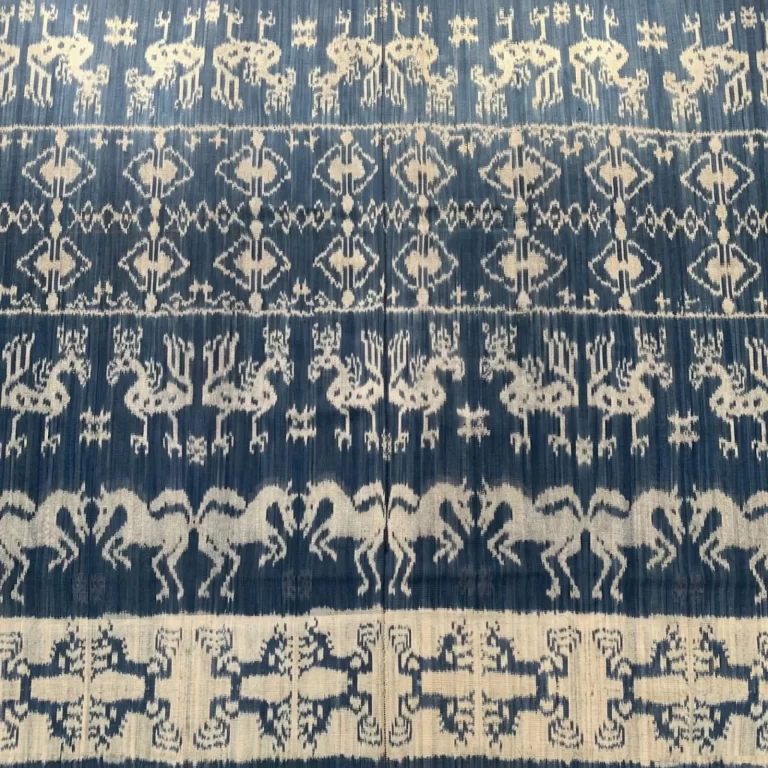
Wora (Indigo)
The deepest blues and blacks, representing the night and the shadowy spirit realm, come from Wora (Indigofera tinctoria). Their production is a marvel of traditional chemistry. Fresh indigo leaves are first fermented in water for days and mixed with a base made from wood ash or lime. The result is usually a soluble “white indigo.” When the yarn is lifted from the vat and exposed to the, the dye oxidizes back into an insoluble blue pigment.
Creating a single high-quality piece of ikat is an act endurance. The work is never solitary; a single large hinggi is often produced by a team of 5 to 7 people, each with specific role, and requires passing through all 42 stages of the weaving process. While a simple cloth may take two to three months, a large ceremonial piece with complex patterns can easily take four to six months. The most intricate designs, requiring countless rounds of tying, dipping in natural kombu and indigo baths, and drying under the Sumbanese sun, can extend to a year or more. This extraordinary investment of human hours is what elevates ikat from mere fabric to an heirloom and a repository of cultural memory.
A Visual Lexicon: Common Motifs and Their Meanings
In Sumba, ikat serves as a pre-literate visual language, or “lexicon,” where motifs communicate social status, spiritual beliefs, and historical events. As the clothes are often used in rituals, the patterns serve as a way for the present generation to pass on coded messages to future generations.
Historically, symbolism of ika textiles have been strictly regulated, with certain designs being exclusive prerogative of the noble classes, called the Maramba, and were often used to denote the rank of the wearer. These high-class hingga were also given during bride-price negotiations, often as a noble gift.
Types of Ikat Motifs
Sumbanese culture has ikat motifs galore. While most of these motifs are multi-layered, with both cultural and visual significance, it is possible to group them under three main categories: animal fauna, flora, and human world.
Most Common Motifs
While motifs used on hingga are plentiful, some figures are more common than others. The most “popular” ikat motifs are njara (horse), wuya (crocodile), andung (skull tree), and kurangu (shrimp).
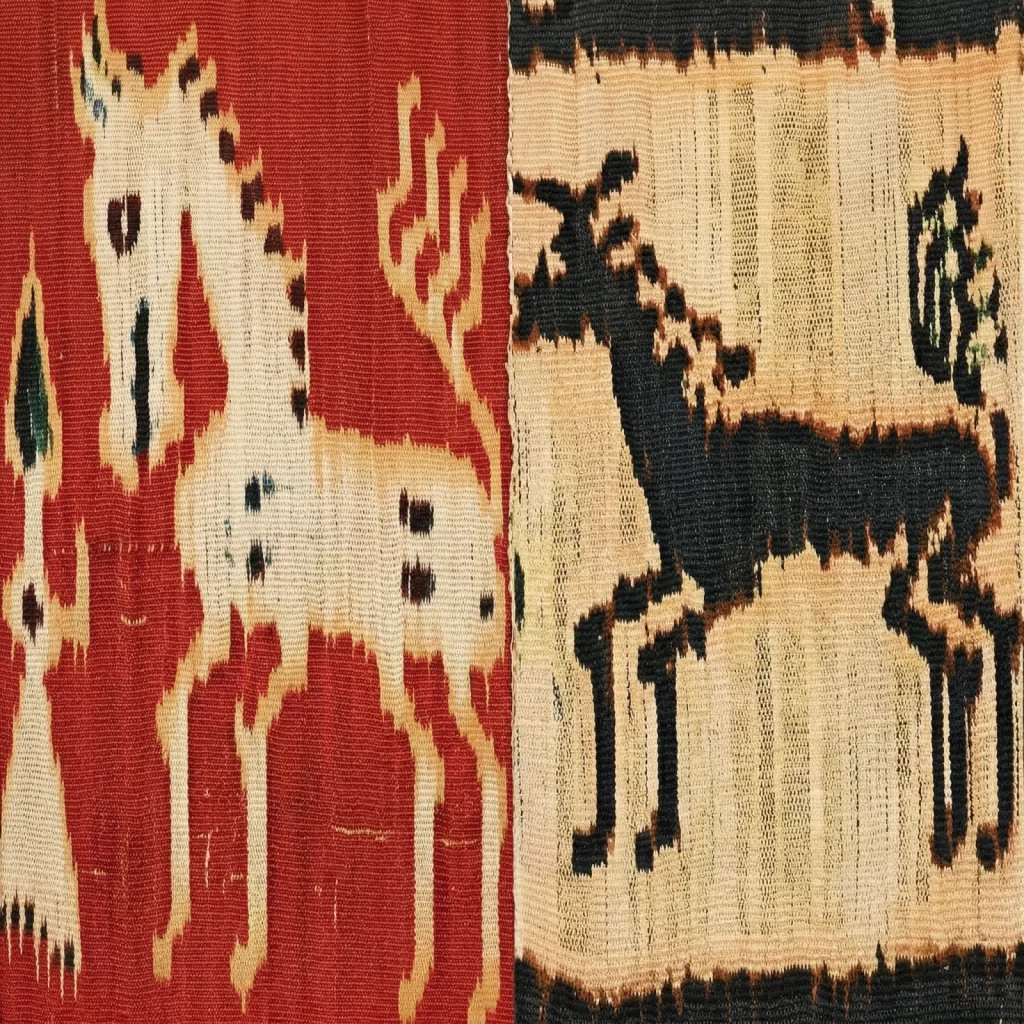
Horse – Njara
The horse is arguably the most potent motif in Sumbanese ikat, universally symbolizing nobility, status, and power. Sumba is famous for its small, sturdy Sandalwood ponies, which historically were the most expensive and desirable items in gift exchanges and bride-wealth negotiations.
However, the motif transcends earthly wealth. In local mythology, the first ancestor, Umbu Walu Sasar, descended from heaven on a noble horse. Consequently, the horse acts as a psychopomp, a spiritual guide. During elaborate death ceremonies, guests bring textiles featuring horses so that the soul of the deceased can “ride” the animal into the afterlife, ensuring a safe journey to the spirit world.
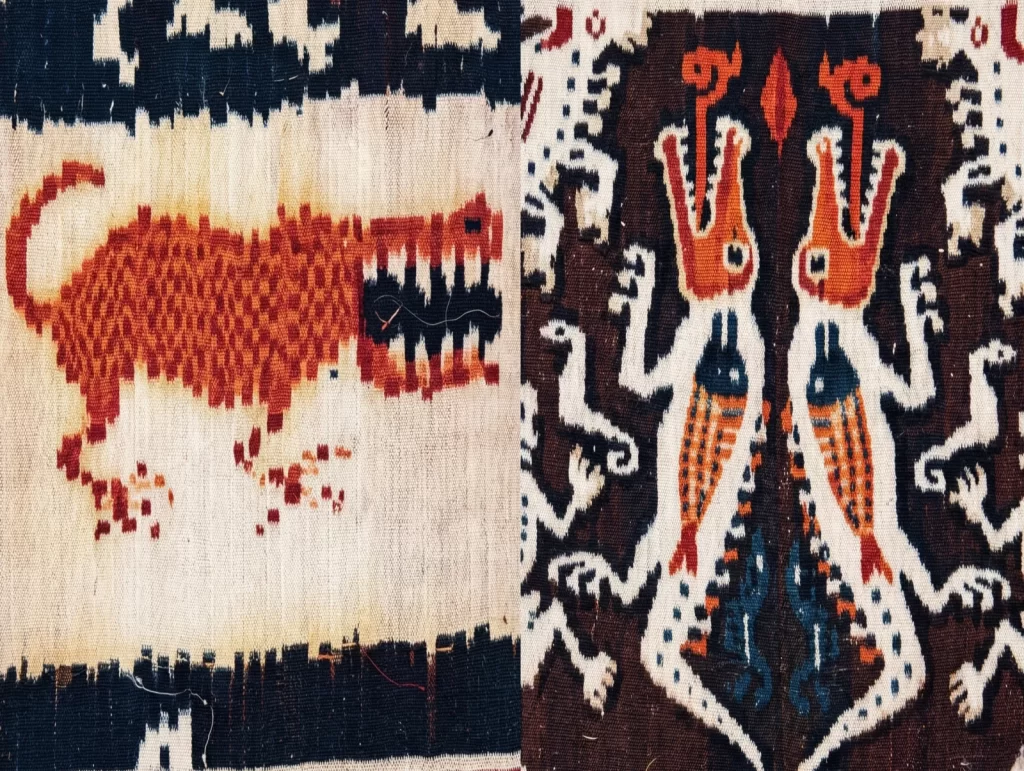
Crocodile – Wuya
Crocodiles are powerful symbols tied to the Marapu belief in the afterlife, which is envisioned as a watery underworld. These amphibians represent the dualistic nature of power: they are masters of both land and water, embodying cunningness, bravery, and protection.
For the nobility, the crocodile (wuya) specifically signifies royal power and ancestry, acting as a guardian spirit for the clan. The inclusion of these sharp-toothed creatures on a hinggi invokes the magical power of transformation, reminding the community of the thin veil between the world of the living and the “awangu,” the world below the waters.
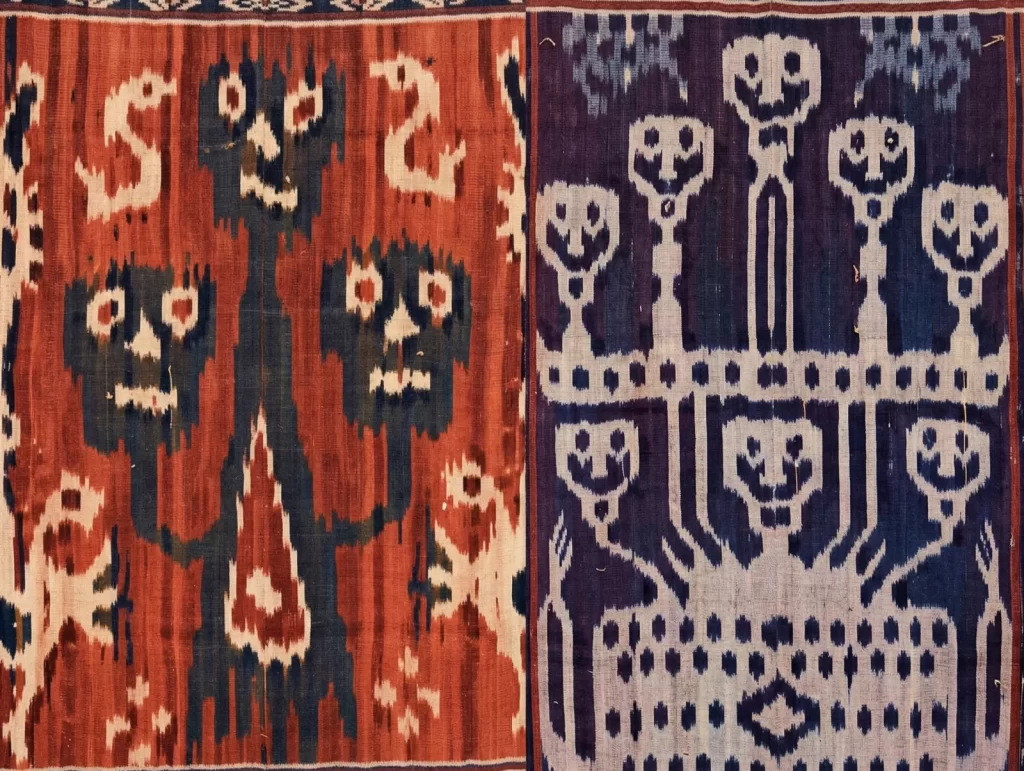
Skull Tree – Andung
The Andung (or Pohon Andung) motif is a stark reminder of Sumba’s history of headhunting, which persisted ritually until the early 20th century. Historically, large trees at the entrance of villages were “fed” with the skulls of enemies taken in raids, serving as a sign of the community’s spiritual sustenance and vitality.
In modern textiles, the stylized tree motif has shifted in meaning from a trophy of war to a symbol of victory, protection, and ancestral power. To wear or possess the Andung is to invoke the protective strength of the ancestors against modern adversities.
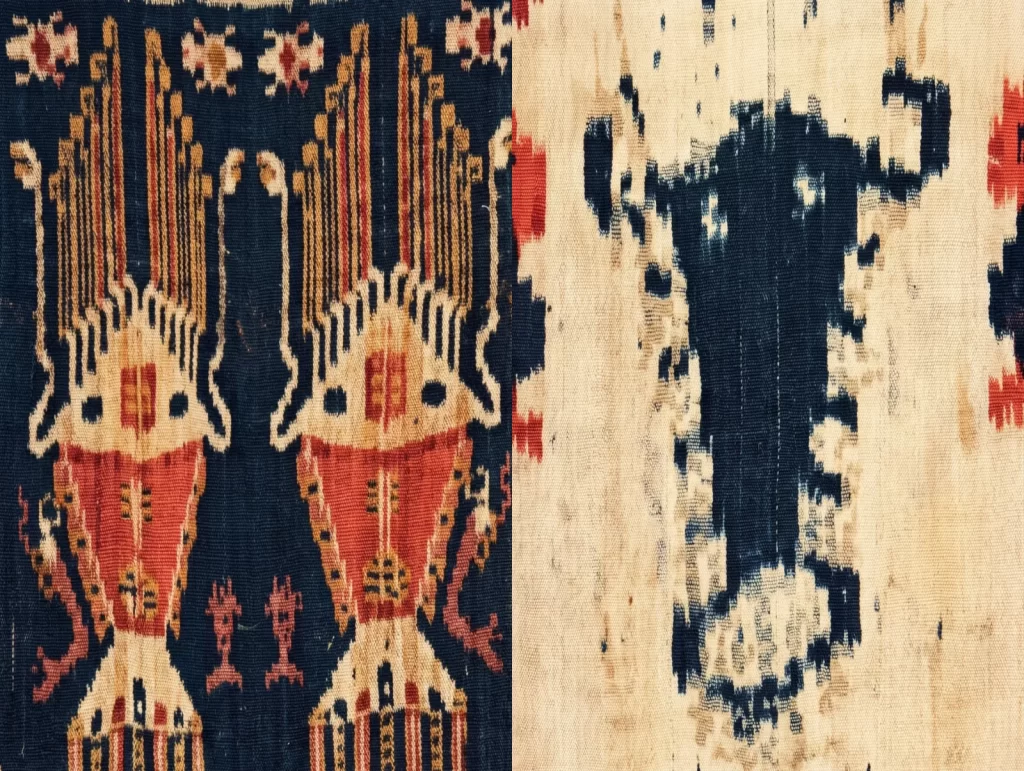
Shrimp – Kurangu
Among the aquatic motifs reserved for nobility, the shrimp is a profound symbol of rebirth and longevity. The Sumbanese observed that these creatures shed their skins to grow, leaving behind an old shell to emerge renewed.
Because textiles are often used as shrouds to wrap the dead, this motif is particularly poignant. It signifies the cyclical nature of existence: the soul sheds its physical body, the “shell,” to transform and be reborn in the next world. Thus, the shrimp offers comfort and hope, representing the eternal cycle of death and renewal rather than an ending.
The Geography of Style: East vs. West
The island of Sumba is geographically divided into two distinct cultural zones, separated not just by landscape but by artistic philosophy and visual aesthetics. The drier, savannah-like expanse of East Sumba produces a bold, narrative-driven style, while the lush, hilly terrain of West Sumba favors a more introspective, geometric abstraction.
East Sumba (Waingapu)
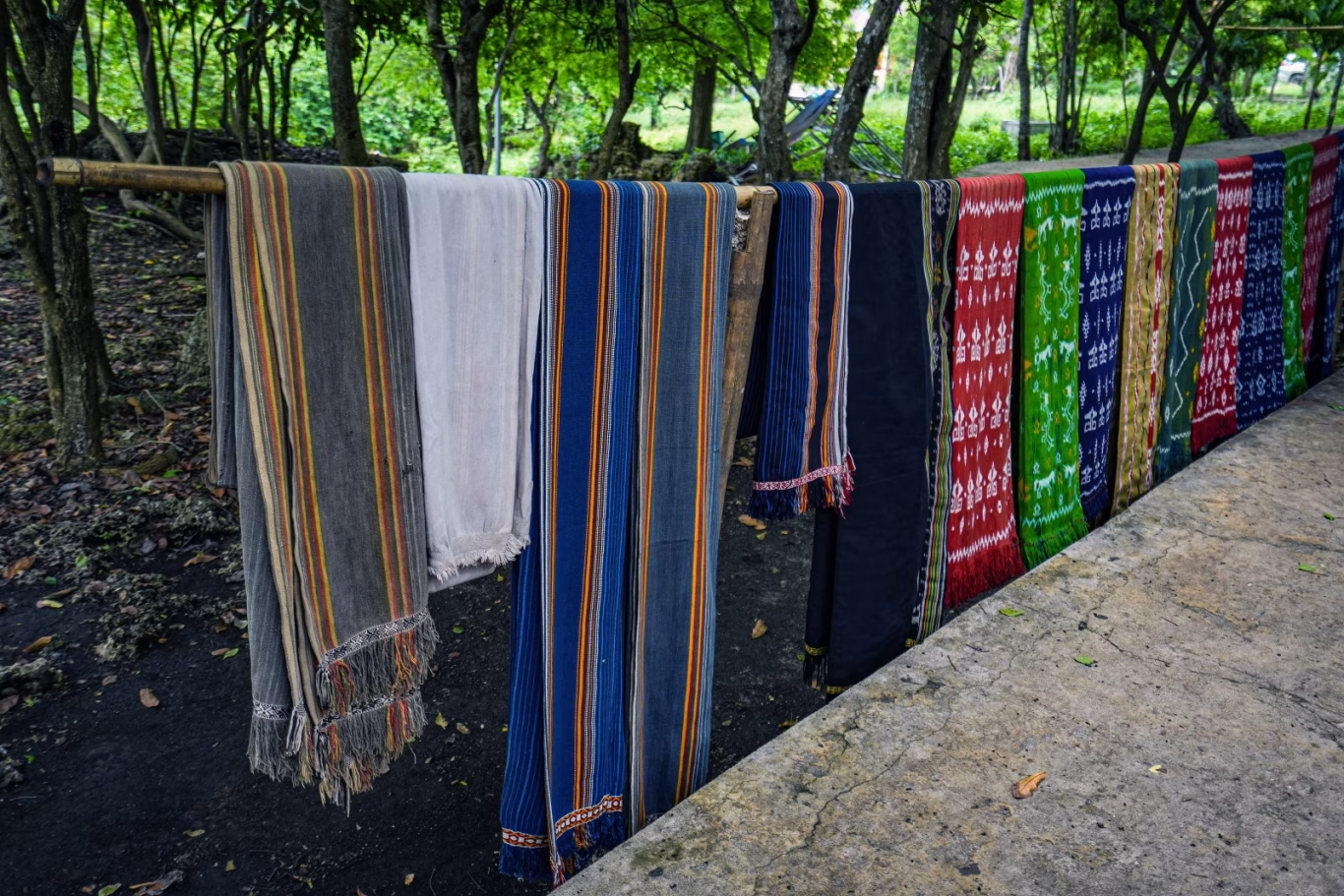
The regency around Waingapu is widely recognized as the heartland of Sumbanese ikat. East Sumba textiles are dominated by figurative designs that tell specific stories of heroic ancestors, warfare, and ritual sacrifice. This region is renowned for its extensive use of Kombu (earthy reds and oranges), which often takes up the majority of the cloth’s background, creating a fiery energy. Motifs are large, bold, and highly recognizable, featuring detailed depictions of warriors on horseback, deer, and intricate patola-inspired lattice borders. The overall aesthetic is one of power and high contrast, intended to be seen from a distance during open-air ceremonies like Pasola.
West Sumba (Waikabubak)
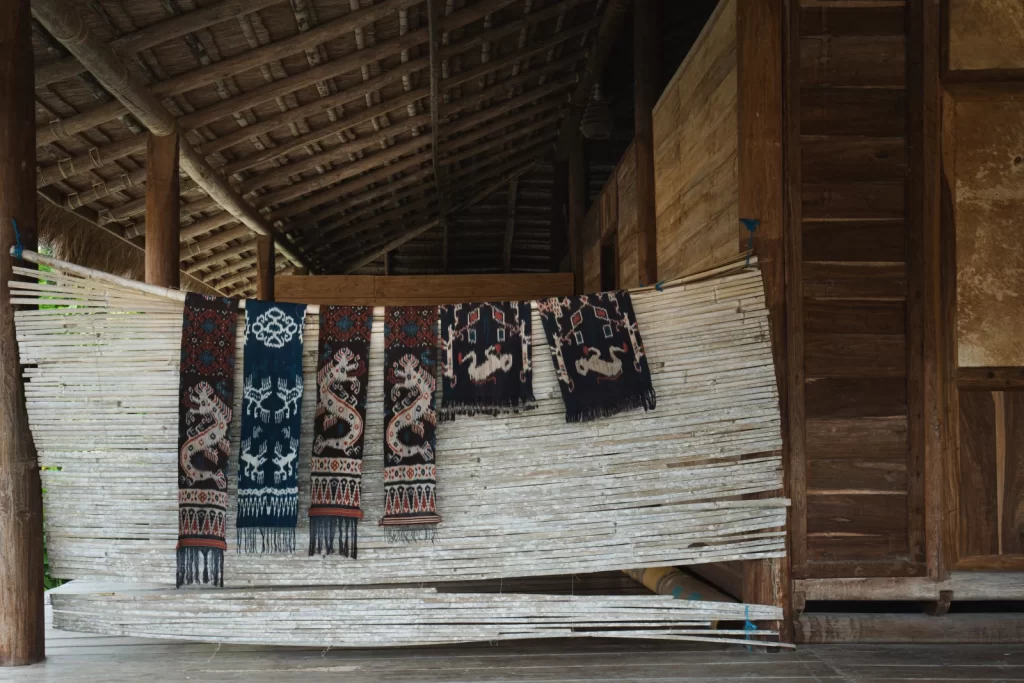
West Sumba textiles are often the favorite of modern art collectors due to their sophisticated abstraction. The motifs tend to be geometric, using stylized diamonds, zig-zags, and repeating chevrons rather than literal animal figures.
Aesthetically, West Sumba places a heavier reliance on the deep indigo blues (Wora) and stark black/white contrasts, often using the red kombu sparingly as an accent rather than a ground color. This palette reflects the wetter, greener environment of the west. The weaving is generally finer, and the patterns are more introverted, requiring close inspection to decipher the complex interlocking shapes that represent spirit guardians and ancestral protection.
How to Buy Ikat Authentically
Purchasing Sumba ikat is an investment in living culture, but the market is flooded with mass-produced imitations. To ensure you are buying a genuine piece of heritage that supports the weavers, you must learn to read the fabric for signs of authenticity and provenance. For this, you need to check the smell, color depth, and weight of the fabric you are planning to buy. If a piece of ikat cloth is too perfect, it is likely a result of industrial manufacturing.
Spotting Natural vs. Chemical Dyes
Supporting Fair Trade
Purchasing authentic pieces of ikat is more than a matter of quality, it is also a question of ethics. Ikat tradition has been struggling to compete with modern manufacturing techniques for many years. Mass-produced imitations of ikat cloth hurt local communities by reducing their potential customers. Furthermore, bad consumer behavior leads to oppression and exploitation of these vulnerable local communities.
The easiest way to access fair-trade ikat textiles is visiting a local ikat weaving village. Weaving is one of the main trades of all traditional villages. So, you can access quality and authentic ikat there. Alternatively, some high-end hotels or resorts might be in agreement with local producers, allowing their guests to acquire authentic pieces while supporting ancestral communities. Local markets across the island might also be good places to find affordable ikats.
If you are interested in exploring this ancient tradition and support its sustainability, don’t forget to add weaving villages to your itinerary when planning your journey.
How to Support Fair Trade
When buying, the goal is to ensure the majority of the profit returns to the women weavers who spend months creating the piece. Avoid buying from mass-market souvenir stalls in Bali or generic hotels, which typically involve exploitative middlemen. Instead, seek out village cooperatives or social enterprises that document the origin, technique, and maker payment.
If possible, visit weaving villages directly, such as Prailiu (near Waingapu) or traditional villages around Waikabubak, where you can watch the backstrap loom in action and negotiate directly with the artisan.
Ask for the name of the weaver; ethical sellers will always know who made the cloth and how much she was paid.
References
- Adams, Marie Jeanne, 1969. System and Meaning in East Sumba Textile Design: A Study in Traditional Indonesian Art, Cultural Report Series 16, Southeast Asia Studies, Yale University, New Haven, Connecticut.
- Wicaksono, Mochammad. (2022). Similar but not the same: The study of weavings cultural materials diversity in Sumba. ETNOSIA : Jurnal Etnografi Indonesia. 7. 10.31947/etnosia.v7i2.23723.
- Halim, Erwin. (2022). Identification of Ethnomathematics in East Sumba’s Woven Fabric Motifs. 2. 31-44.